Imagine driving your RV home through an intense Northern California storm, with heavy downpours bouncing off your windshield and strong gusts shaking your rig. You finally park at your campsite or pull into your driveway, relieved to have made it through the storm. A few days later, you notice water stains on the ceiling or foggy RV windows.
Storms rarely cause just one isolated problem on a recreational vehicle. Instead, high-velocity winds, heavy vibrations, and large hailstones cause a dual blow to the two most vulnerable areas of your vehicle: the rooftop sealants and the window assemblies.
If you notice roof leaks or window damage after a storm, scheduling a professional motorhome repair or trailer service as soon as possible can help prevent the damage from spreading. In this blog, we’ll explain why hidden leaks worsen quickly and how expert technicians track down and repair this tricky, interconnected storm damage.
| Foggy RV Windows? Call Now |
Why Do Storms Cause Roof Leaks and Window Damage at the Same Time?
Storms damage the roofs and windows of your motorhome at the same time because both components depend on flexible rubber sealants and structural adhesives that can crack or wear out under strong wind, rain, and hail.
Strong winds can cause your motorhome to flex slightly, putting stress on the roof seams and window frames. Over time, older sealants may crack or pull away, allowing water to seep inside.
The roof cap and the side walls meet at the upper corner seams, which are tightly sealed with specialised lap sealants. Heavy rain can seep through these small cracks and start causing damage before you even realize there’s a problem. By the time the weather clears, water may already be inside your RV.
What Is Foggy RV Window Damage and How Does It Link to Structural Water Leaks?
Foggy window damage is the permanent condensation that gets trapped within double-pane glass when the perimeter seal breaks. It directly links to structural water leaks because the exact same frame movement that destroys the window’s internal spacer gas allows external rainwater to bypass the outer frame flange and soak deep into the surrounding interior wall insulation.
When a storm rattles the window frame, the internal seal breaks, the insulating gas escapes, and moisture enters between the panes.
Once the seal fails, water can travel behind the window frame into the wall, causing hidden damage before you notice it. By the time you spot the fogged glass, water from the same storm may already be rotting the interior wall studs right beneath the frame.
How Do Roof Leaks Mimic Window Failures on a Motorhome or Trailer?
Roof leaks are similar to window failures because gravity forces water to enter through high rooftop seams and travel downward through internal wall channels, often pooling directly on top of window frames. This tricks owners into replacing window seals when the true source of the water damage is a cracked roof seam feet above.
Water often enters through the roof and travels inside the walls before appearing around the windows. As it moves through the wall cavities, it may collect above a window frame before becoming visible inside your RV.
When this happens, you will see water actively dripping from the top of your window casing or notice the wallpaper around the window peeling away. It’s easy to assume the window seal is the problem, but resealing the window alone won’t stop the leak.
If the water is migrating from a roof leak, it will continue to rot your ceiling panels and wall insulation until the primary rooftop puncture is completely sealed. This is why professional RV inspection is important after a storm.
What Are the Long-Term Consequences of Ignoring Hidden Storm Damage?
Ignoring hidden storm damage leads to rapid wood rot, harmful mold growth, and electrical corrosion. Finding and repairing leaks early helps prevent more serious damage.
| Component Affected | Initial Minor Symptoms | Long-Term Unchecked Damage |
| Roof & Ceiling | Small water spots, soft ceiling panels | Complete wood rot, sagging fabric, structural collapse |
| Side Wall Framing | Peeling wallpaper, musty interior odors | Delamination (outer fiberglass separating from the frame) |
| Window Assemblies | Light glass fogging, minor track rust | Rotted window cutouts, warped tracks, and permanently etched glass |
| Electrical Systems | Blown fuses, flickering cabin lights | Short circuits, corroded wire harnesses, and appliance fire risks |
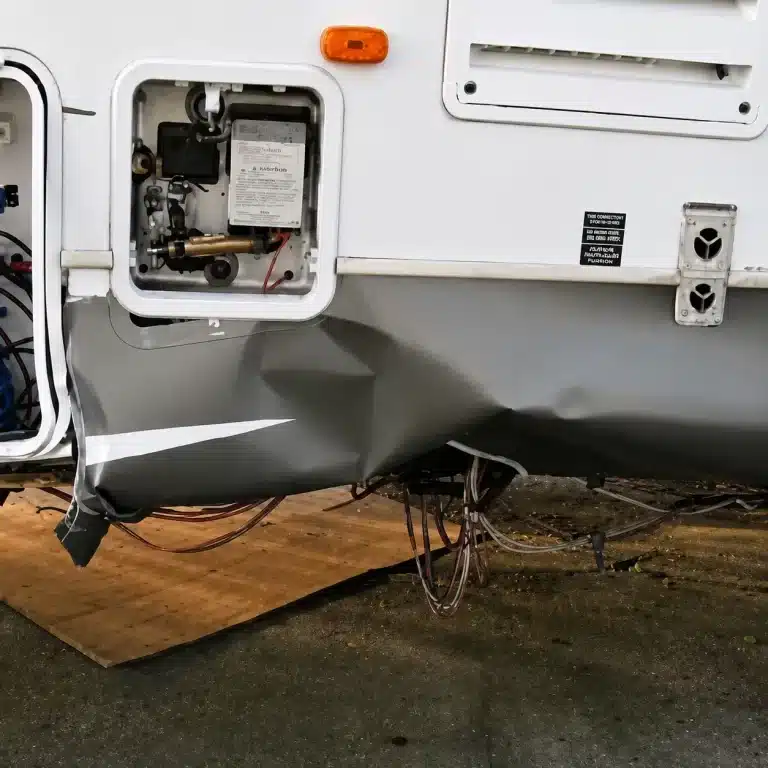
As the table shows, even a small leak can turn into major structural damage if left untreated. Moisture can cause sidewall delamination and other issues that may require extensive RV body and paint repair. Repairing leaks early helps protect your RV and keep repair costs under control.
Read More About
- Why Hot Temperatures Put More Stress on RV Windshields
- Burning Odor in Your RV? Common Causes You Should Know
- Common Trailer Squeaks and Noises: Causes and Easy Fixes
How Do Professionals Diagnose Interconnected Roof and Glass Damages?
After finding the leak, technicians complete the necessary repairs as part of a comprehensive RV service, replacing damaged materials, resealing affected areas, and protecting your RV from future leaks.
1. Electronic Moisture Mapping
The RV specialists use moisture meters to detect hidden water behind walls and ceiling panels without causing damage.
2. Timed Sectional Water Testing
They test different sections of the roof and windows with water to identify the exact source of the leak.
3. Structural Reconstruction and Resealing
Once the entry points are confirmed, a professional RV repair team replaces the damaged structural framing wood. They remove & rebuild the windows and apply commercial-grade UV-resistant sealants across the roof.
Frequently Asked Questions
1.Can I use residential silicone to patch my trailer’s roof leaks after a storm?
No, you should not use standard residential silicone sealants on the roofs or windows of your motorhome or trailer. Residential silicone does not bond well with specialised RV roof materials such as TPO, EPDM rubber, or fiberglass. The deep vibrations, temperature shifts, and highway winds will cause the residential silicone to peel away from the seams, allowing water to enter the structure again.
Instead, professional trailer service teams use RV-grade sealants that are made to handle weather, temperature changes, and road vibrations.
2. How long does a professional RV body and paint repair take after storm damage?
The timeline for a professional RV repair depends on the depth of the water penetration and the extent of the physical damage.
A basic roof reseal and single window rebuild can be completed within two to three business days. However, if the stormwater caused extensive sidewall delamination or rotted out the interior structural wood framing, the repair process will require one to two weeks.
A comprehensive RV service team will carefully remove the outer skin, rebuild the internal support structure, and match the exterior paint to return your rig to factory condition.
3. Why do my dual-pane windows stay foggy even when the weather dries out?
Your dual-pane windows stay permanently foggy because the seal around the glass has failed, allowing moisture to get trapped between the panes.
Once the factory perimeter seal is broken by storm stress, wet air continuously moves in and out of the panes. When the sun shines on the window, this trapped water evaporates and condenses against the inner glass surfaces, creating a permanent haze.
The only way to resolve this problem permanently is to have a specialised trailer repair shop remove the window, separate the glass panes, clean away the hard mineral deposits, install a new spacer bar, and reseal the entire assembly.
| Need Trailer Service in Sacramento? Call Now |
Final Thoughts
Your motorhome, RV, or trailer is also a financial investment and your home on the road. It deserves to be protected by a trusted professional team. Do not allow hidden storm damage to ruin your sidewalls, rot your ceiling framing, or permanently ruin your visibility.
Scheduling a professional RV service or motorhome repair early can protect your vehicle, extend its lifespan, and help you avoid more expensive repairs later.
Keep Your RV Road-Ready with McColloch’s RV Repair
Storm damage isn’t always easy to spot, but even a small roof leak or foggy window can lead to bigger problems if it’s left untreated. At McColloch’s RV Repair, our experienced team carefully inspects your RV, motorhome, or trailer to find hidden damage before it becomes a costly repair.
With over 30 years of experience in handling all makes and models of 5th wheels, our team understands the real issue behind your RV’s glass damage or leaks. We specialise in managing annoying foggy RV windows to offer a clear view for your next adventure, and top-tier RV body and paint repair to remove ugly water stains and structural exterior damage smoothly.
Whether you need an advanced motorhome repair package, a comprehensive RV service tune-up, or a meticulous structural trailer repair, our team is well equipped to offer exceptional outcomes.
Call us today at 916-929-3510 to schedule your trailer service in Sacramento!